About
High-performance computing and scientific software for large-scale simulation - building the numerical methods and coupled Earth-system models behind next-generation weather and climate prediction.
I am a Computational Scientist and Research Software Engineer at the Cooperative Institute for Modeling the Earth System at Princeton University and in the Weather and Climate Division at NOAA’s Geophysical Fluid Dynamics Laboratory (GFDL). I work at the intersection of high-performance computing and scientific software engineering, designing scalable parallel algorithms and building, optimizing, and maintaining production simulation codes that run on large HPC systems.
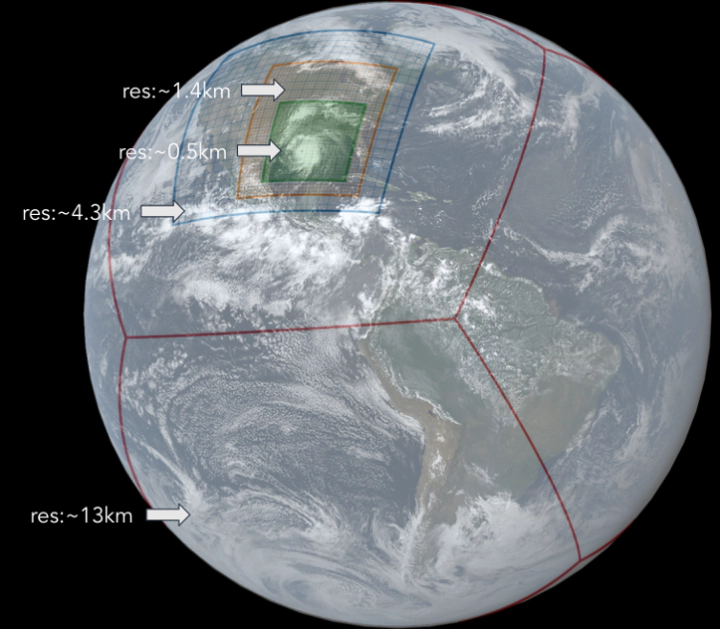
I apply that work to numerical methods and coupled Earth-system models for high-resolution weather and climate simulation. My work centers on GFDL’s FV3 dynamical core and the SHiELD modeling framework, where I develop scalable capabilities for coupled atmosphere-ocean-land simulation on modern HPC architectures.
Before joining Princeton and GFDL in 2020, I began working in computational fluid dynamics during my M.Sc. at INSA Lyon with the turbomachinery team, earned my Ph.D. in Mechanical Engineering at the University of São Paulo on multiscale multiphase flows, and held a postdoctoral fellowship at the University of Waterloo studying heated particle-laden turbulence. That trajectory, from classical CFD and multiphase flow, to numerical methods and dynamical cores, to coupled Earth-system modeling, shapes how I approach model development today.
Ph.D. in Mechanical Engineering, 2018
University of São Paulo, Brazil
M.Sc. in Fluid Mechanics, 2014
INSA Lyon, France
B.Sc. in Mechanical Engineering, 2014
ULFG2, Lebanon
Research Areas
Scalable algorithms, parallel numerical methods, performance optimization, and portability across modern HPC architectures.
Architecture, implementation, testing, and maintenance of production-scale computational physics and Earth-system model infrastructure.
Dynamical cores, grid design, nesting, regridding, and transport schemes for multiscale geophysical simulation.
High-resolution atmosphere, ocean, land, and fully coupled climate modeling with SHiELD, MOM6, and LM4.
Research
Earth-system modeling, dynamical cores, and coupled simulation. Click any project for details, figures and animations.
Earlier Research — Computational Fluid Dynamics
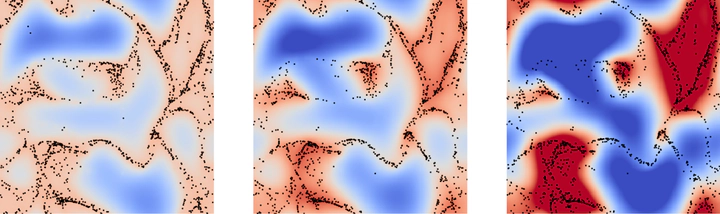
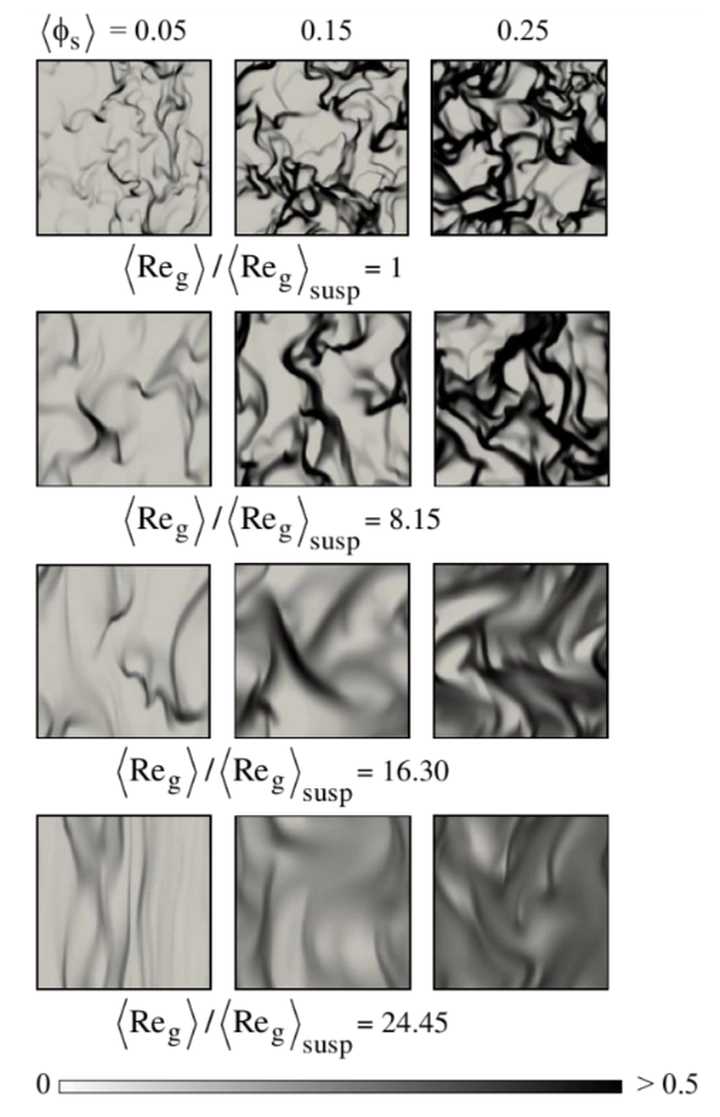
Multiphase flow, turbulence, and sub-grid modeling: the numerical foundations behind the Earth-system work above.
Selected Publications
Software & Models
Open-source scientific infrastructure I develop and contribute to at GFDL, spanning atmospheric dynamics, coupling, ocean, land, and sea-ice modeling.
Contact
Interested in high-performance computing, numerical modeling, Earth-system simulation, or scientific software?
I am always glad to discuss research collaborations, scientific software development, and computational modeling.